
Balcony Solar Panels UK
Affordable plug-in solar panels for flats, apartments, balconies and smaller homes
Generate your own renewable electricity with a simple plug-in solar panel system that’s designed specifically for flats, apartments, balconies and smaller homes.
Introduction
Balcony solar panels are one of the biggest innovations in UK home energy in recent years.
For the first time, households in the UK can install compact solar panels that plug into a standard socket, making renewable energy more accessible for people living in flats, apartments, smaller homes, and properties where traditional rooftop solar isn’t practical.
Whether you own your home or rent (with the appropriate permissions), plug-in solar panels could help reduce the electricity you buy from the grid and lower your energy bills while generating your own clean electricity.
What are balcony solar panels?
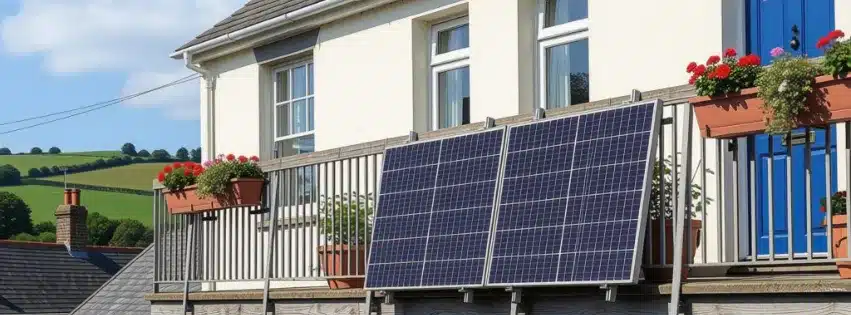
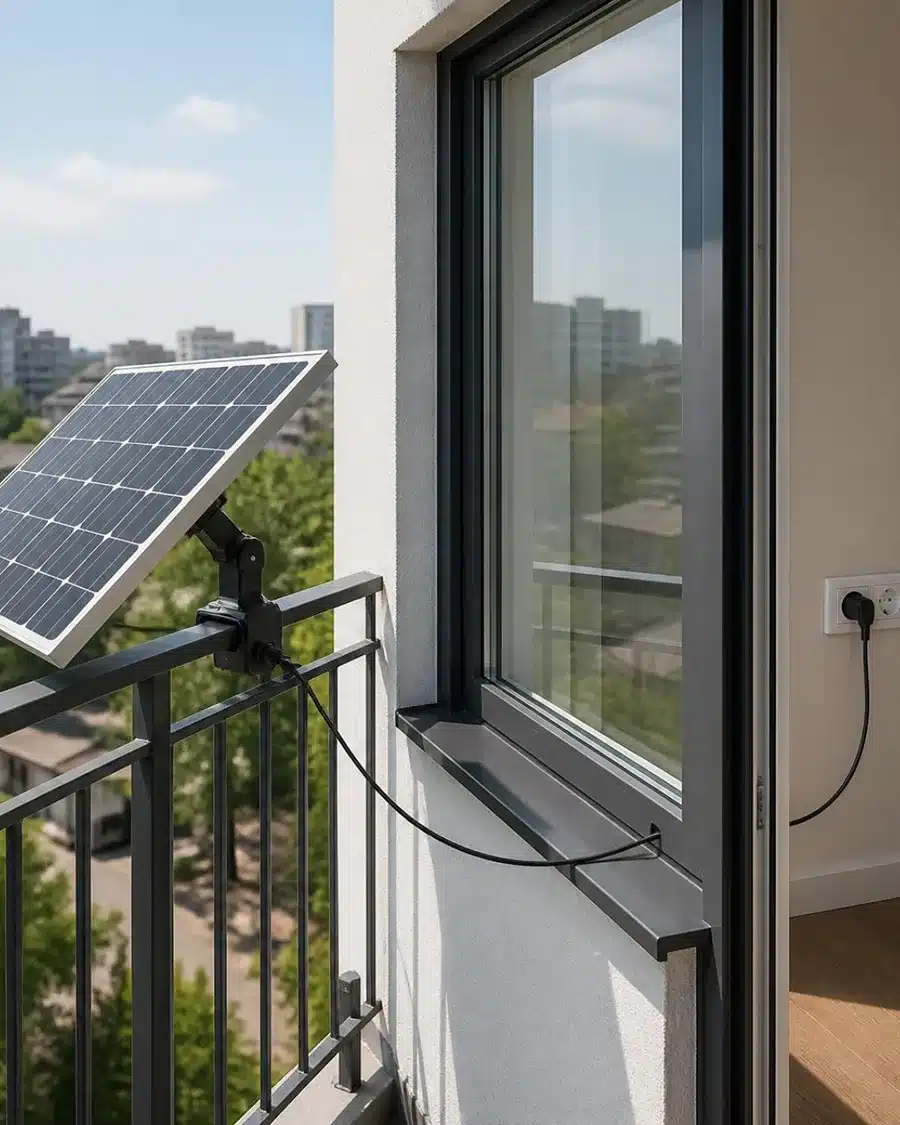
A balcony solar system is a compact solar installation, usually made up of one or two solar panels and a small device called a microinverter.
Most UK balcony solar systems generate up to 800W of electricity, making them ideal for reducing daytime electricity consumption without the cost or complexity of a traditional rooftop solar installation.
The solar panels generate electricity from daylight. The microinverter converts that electricity into the same type of power used in your home (from DC to AC).
Instead of being hardwired into your consumer unit like a traditional rooftop solar system, it simply plugs into a suitable mains socket.
This plug-and-play design means homeowners and eligible renters can begin generating renewable electricity without installing a conventional roof-mounted solar system.
Your home then uses that electricity before drawing additional power from the National Grid.
How do plug-in solar panels work?
This is the question almost everyone asks - surely electricity only comes out of a plug socket?
It feels counterintuitive, but a plug socket isn’t actually a one-way outlet. It’s simply a connection to your home’s electrical wiring. Normally, appliances like your kettle or television draw electricity from the grid through that connection. A plug-in solar system does the opposite.
It generates electricity and feeds it safely into your home’s electrical system through exactly the same connection.
The electricity produced by your solar panels is used by your appliances first. If your home needs more electricity than the panels are producing, the National Grid supplies the difference.
This happens automatically, so there’s nothing you need to switch on or manage. Your home simply uses your own solar electricity before importing any additional electricity from the grid.
Everything happens seamlessly - you don’t have to switch anything on or change how you use electricity.
What can an 800W balcony solar system power?
Using a 800W plug-in balcony solar system won’t power your entire home, but it can make a noticeable contribution to your everyday electricity use and help reduce the amount of electricity you buy from the National Grid.
On a good sunny day, it could generate enough electricity to help power things like:
- Fridge-freezer
- Broadband router
- Laptop
- Phone chargers
- Lighting
- One washing machine cycle
- Several hours of television
Balcony solar panels are particularly effective at covering your home’s constant “background load” - the electricity used by appliances that run throughout the day, even when you’re not actively using them.
What happens to any unused solar electricity?
Your home always uses the solar electricity first.
If your solar panels are producing more electricity than your appliances are currently using, any surplus may be exported back into the local network, depending on your electricity meter, supplier arrangements, and the design of your plug-in solar system.
If there’s little or no sunlight, your home simply continues using electricity from the National Grid as normal.
This means your electricity supply remains completely automatic, with your home drawing extra power from the grid whenever it’s needed.
Who are plug-in solar panels suitable for?
Plug-in solar could be a great option if you:
✔ Live in an apartment or small house
✔ Have a balcony, terrace or small outdoor space
✔ Can’t install traditional rooftop solar
✔ Rent your home (subject to relevant permissions)
✔ Want a lower-cost introduction to solar energy
✔ Want to reduce your daytime electricity bills
✔ Want an affordable way to generate your own renewable electricity

FAQs about balcony solar panels
Are plug-in balcony solar panels legal in the UK?
Yes. Plug-in balcony solar systems are now permitted in the UK, provided they comply with the latest UK product and electrical safety requirements.
Do balcony solar panels need planning permission in the UK?
In many cases, no. However, rules can vary depending on your property, whether you live in a listed building or conservation area, or if your lease or landlord has specific restrictions.
Can renters install plug-in solar panels?
Potentially, yes. You'll usually need permission from your landlord or managing agent before installing panels on a balcony or external wall.
Can an 800W balcony solar system power an entire house?
No. A maximum-size 800W system is designed to reduce your everyday electricity consumption rather than replace a full rooftop solar installation.
How much can balcony solar panels reduce electricity bills?
The more of your solar electricity you use as it's being generated, the less electricity you need to buy from the National Grid.
Savings will depend on your energy use, the size and position of your system, and the amount of sunshine throughout the year.
Can balcony solar panels be installed on a fence?
Some systems can also be installed on fences, garden walls or freestanding frames, provided they receive sufficient sunlight and comply with the manufacturer’s installation guidance and current UK regulations.
Which direction should balcony solar panels face?
South-facing installations generally provide the highest electricity generation, although east and west facing systems can still produce useful amounts of renewable energy throughout the day in the right conditions.
How much can balcony solar panels reduce electricity bills?
The more of your solar electricity you use as it's being generated, the less electricity you need to buy from the National Grid.
Savings will depend on your energy use, the size and position of your system, and the amount of sunshine throughout the year.